our soil
January 2026
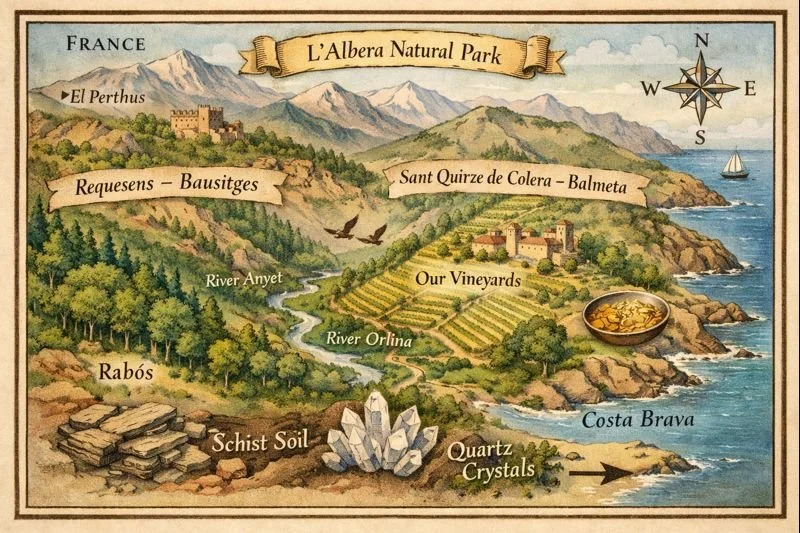
Our vineyards are located within the Albera Natural Park, the easternmost extension of the Pyrenees. The park stretches from El Perthus on the French border all the way to the Mediterranean Sea and forms a natural boundary between France and Spain.
AI is our friend….
Within the Albera mountain range, two distinct zones can be identified: the western part, Requesens–Bausitges, and the eastern part, Sant Quirze de Colera–Balmeta. It is in this eastern zone that our vineyards are situated.
The western section is almost entirely forested, with a rich diversity of cork oaks and holm oaks. Along the Anyet River, the vegetation changes to willows, ash trees, and alders.
The eastern section is shaped by the high valley of the Orlina River, which flows through the village of Rabós. According to local legend, gold-bearing sand was once found in the river, hence its name: Orlina, derived from “oro”, the word for gold.
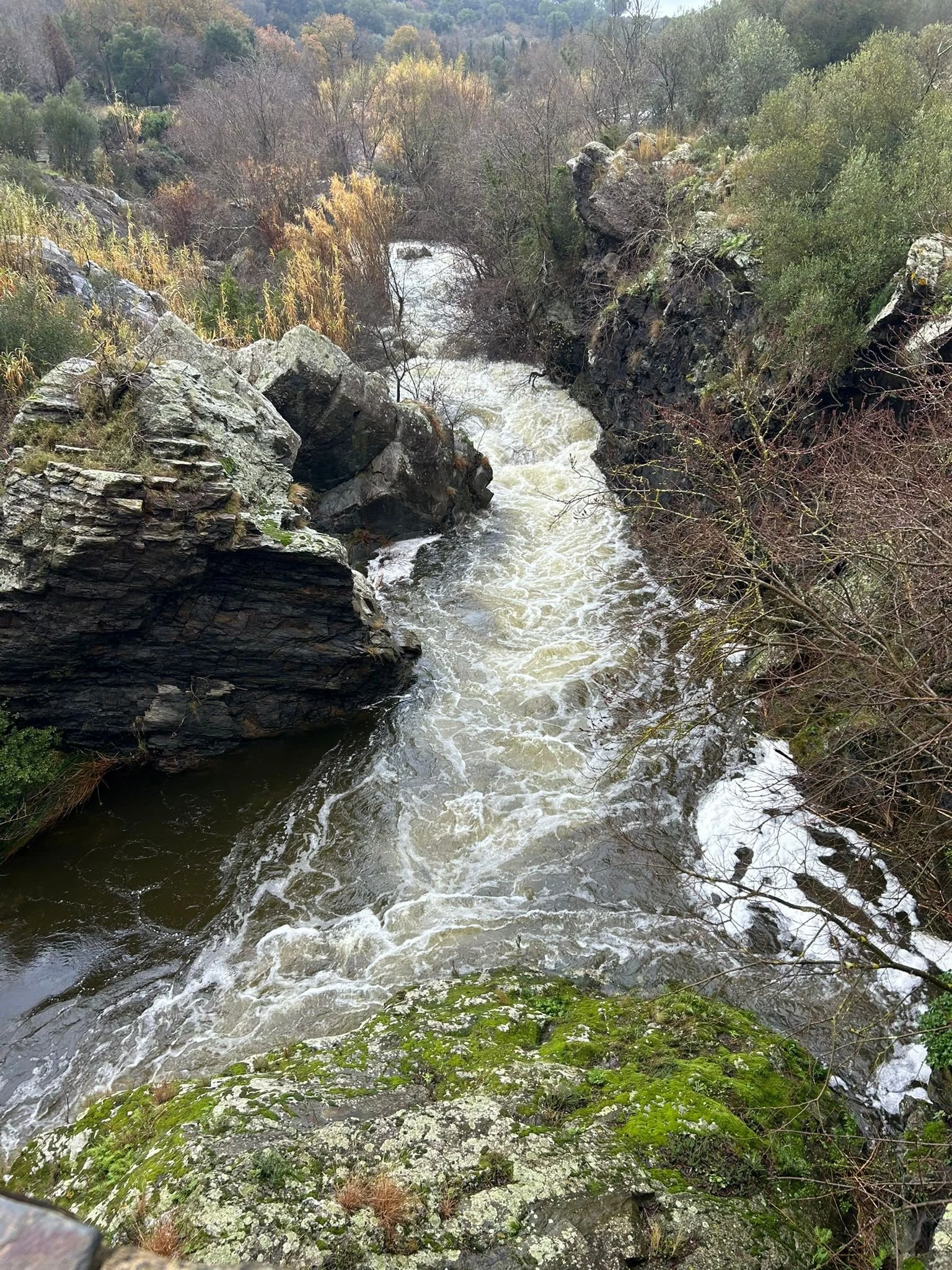
The Orlina river this month after rainfall
The soils of the Albera Natural Park are composed of various types of rock, but for us, schist is by far the most important. Schist soil originates from metamorphic rock and is characterised by its flaky, layered structure, ideal conditions for viticulture. It retains heat efficiently while offering excellent drainage.
Vine roots here can penetrate 7 to 8 metres deep in search of naturally available water. On their journey downward, they absorb a wide range of minerals and salts, which profoundly influence the character of the grapes. The result is intense, complex wines with pronounced minerality, and concentrated flavours.
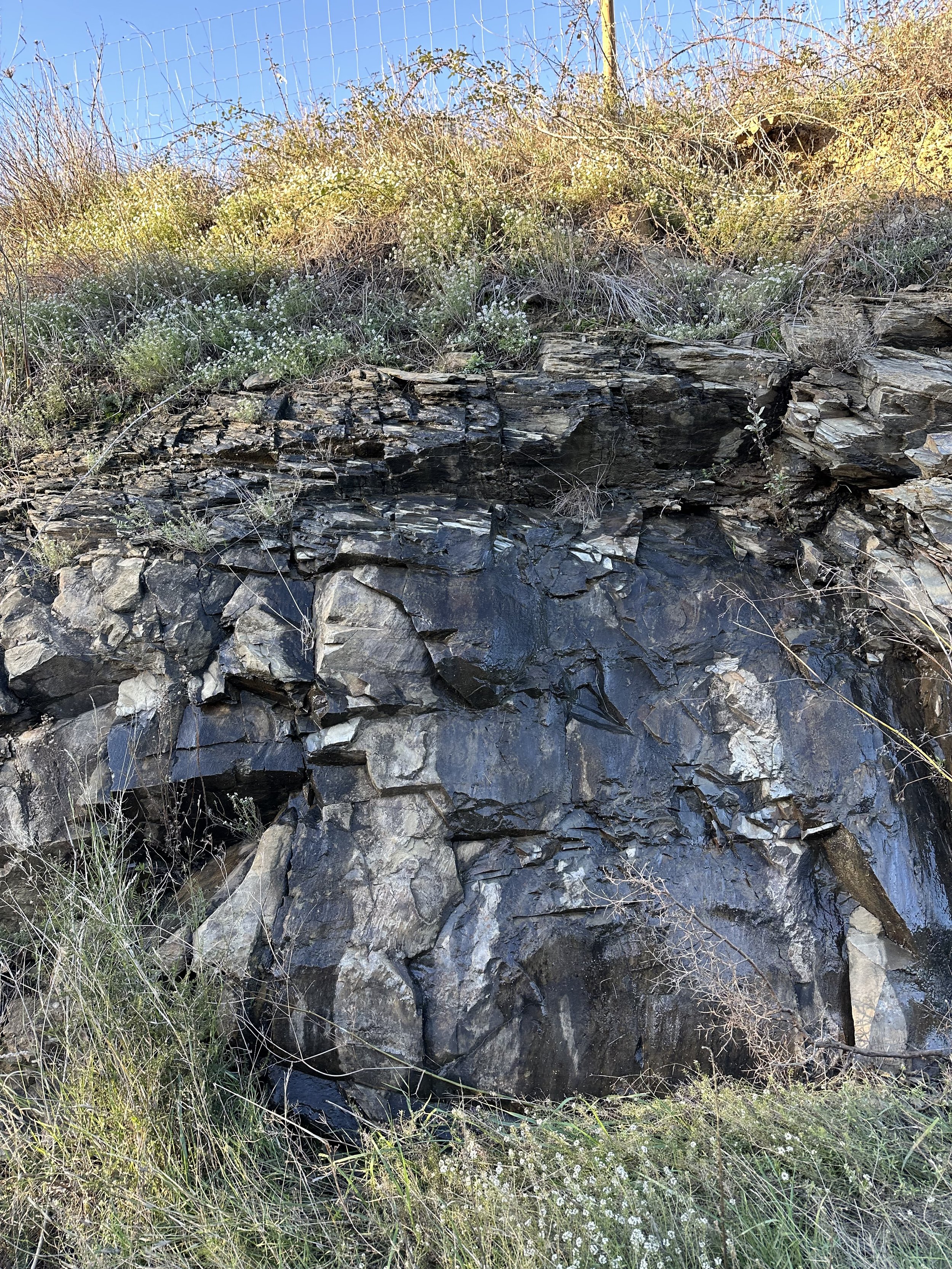
Schist below the vineyard
The schist in our region is interwoven with quartz, a mineral known for its unique properties. Quartz is piezo-electric, meaning it generates an electrical charge when pressure is applied. While scientists may focus on this physical phenomenon, we as winemakers are equally fascinated by the more mystical qualities attributed to quartz, its ability to purify and amplify energy, encourage clarity and spiritual growth, and protect against negative influences.
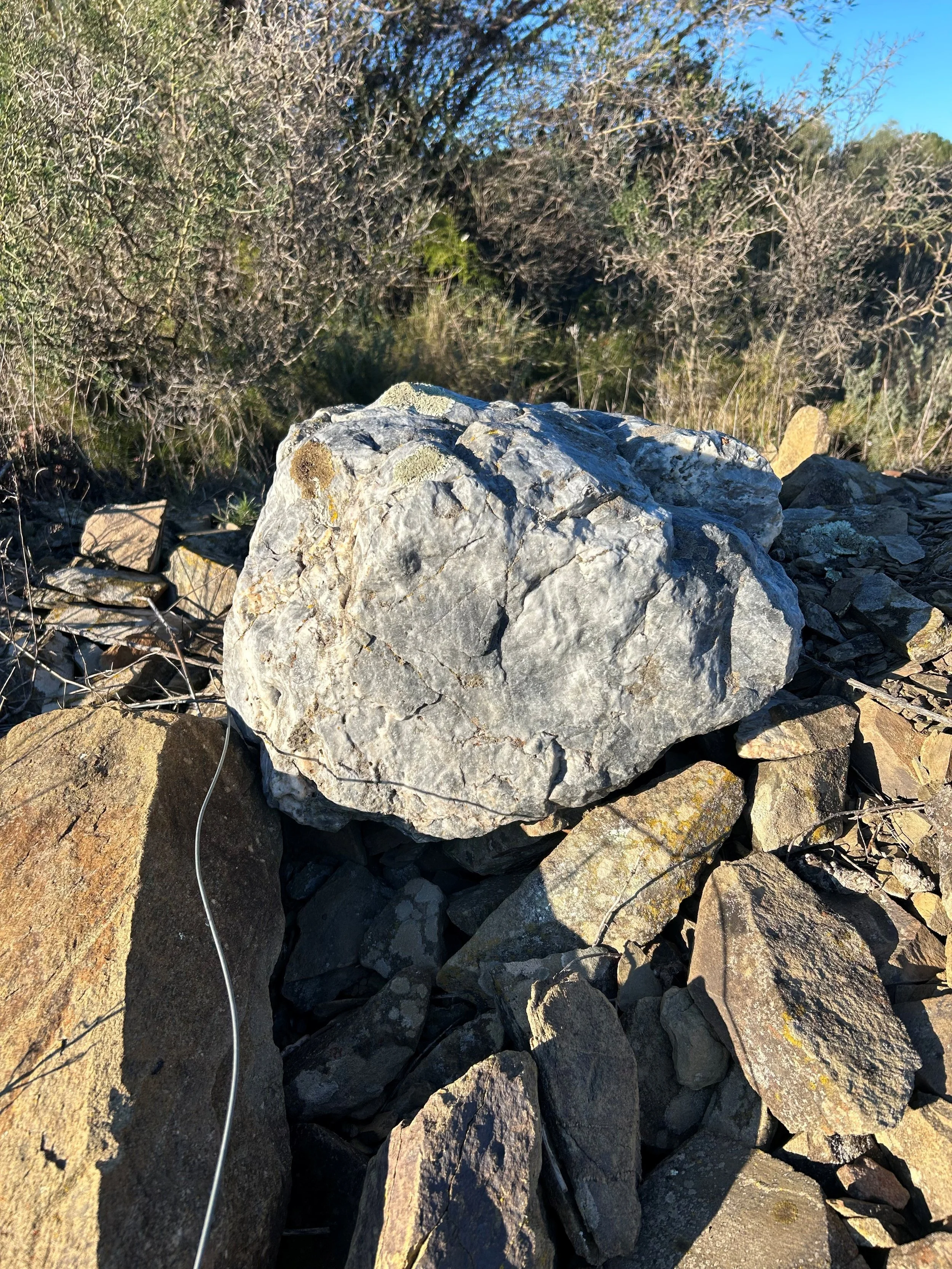
a huge quartz rock in our barbera vineyard
We use this quartz to make the biodynamic preparation 501, by grounding up these quartz stones, then making a paste of it and putting it into cow horns, buried in the spring, to be digged up in fall, 6 months later.
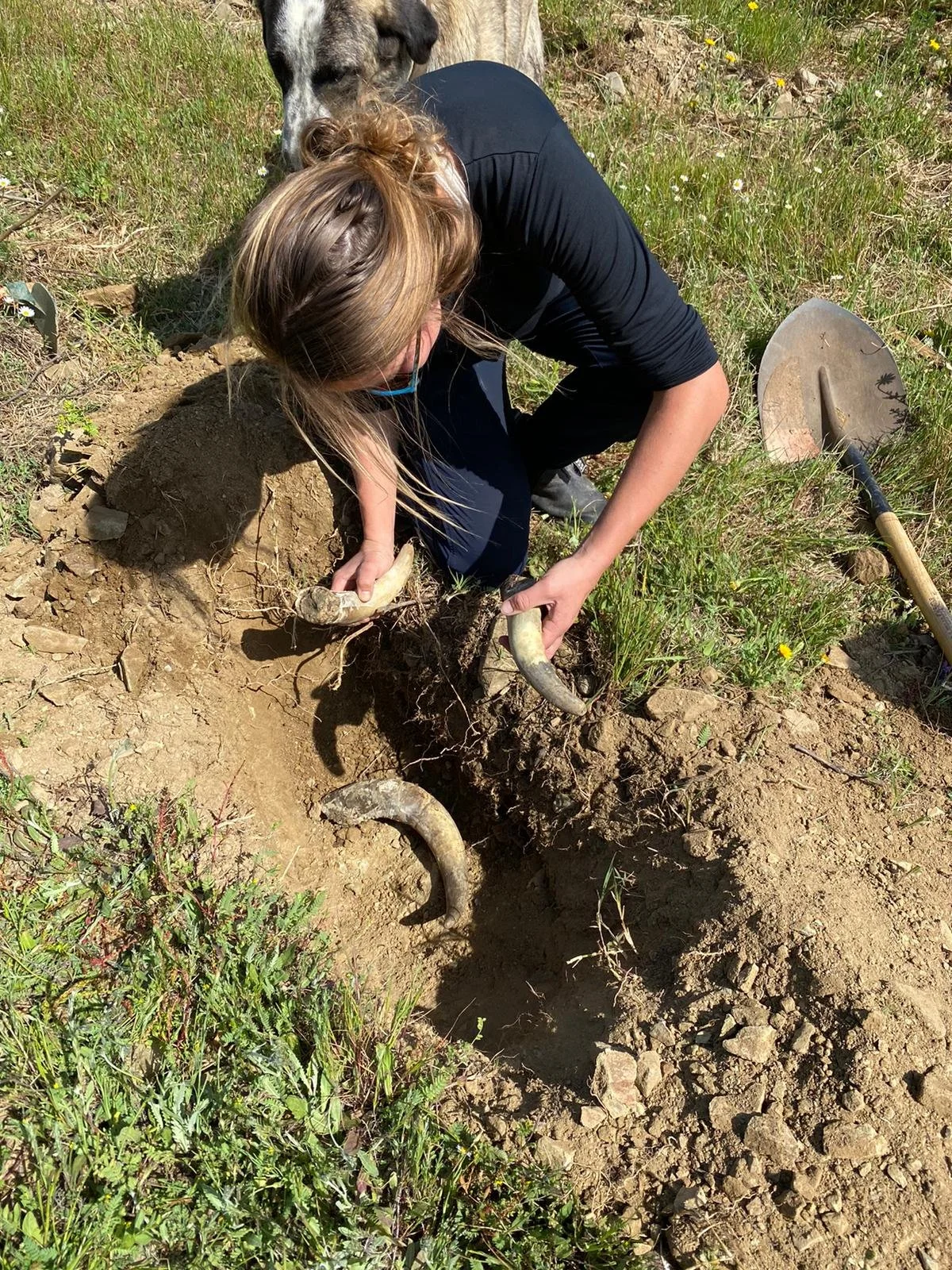
Burying the cow horns with preparation 501 (quartz)
Our biodynamic approach to viticulture fits this soil type perfectly. Combined with the strong Tramontana wind, disease pressure in this region is naturally low, making chemical treatments unnecessary.
Renowned wine regions where schist plays a defining role include the Douro in Portugal, Morgon and Muscadet in France, and Priorat in Spain.
In our view, the Alt Empordà deserves to be mentioned far more often alongside these names.
With love,
The Tortuga Family 🐢